

Relay launched as an AI marketing product backed by a striking funding claim. A day later, Fastlane’s founder accused it of copying his startup. The accusation remains disputed and unproven. The more useful question is what customers lose when products compete by repeating the same visible ideas.
A launch built for attention
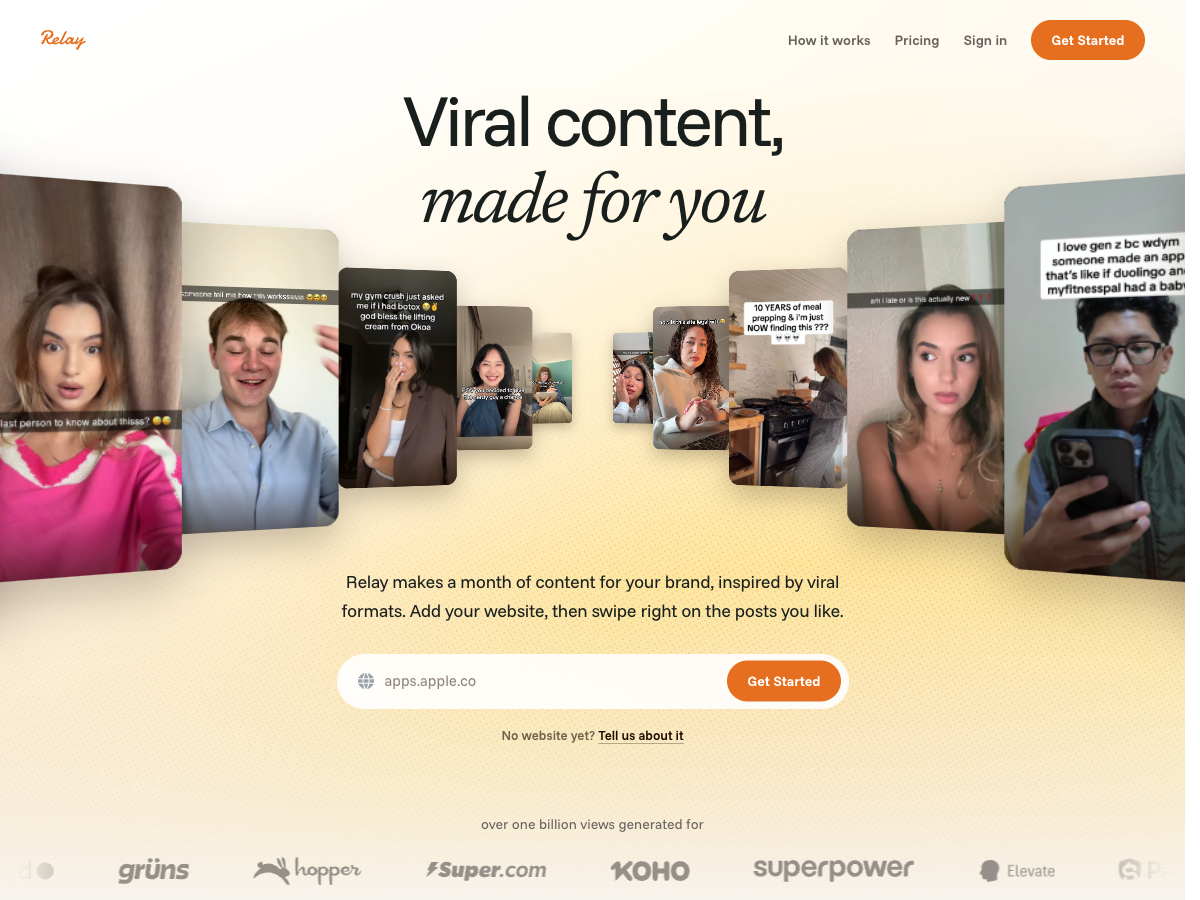
On 1 October 2026, Relay general manager Kailash Sarma announced the product and said it had raised $20 million from Google, Point72 and a Reddit founder. He also promoted access to 50,000 US creators. These are company claims; we have not independently verified the amount, allocation or network size.
Kailash Sarma · @klashsarma
“Today we're introducing Relay. We raised $20M from Google, Point72 & the founder of Reddit to build it.”
This records Relay's public statement. It does not independently confirm the funding structure.
See the original announcement ↗ Captured 28 Oct 2026 · Ref 01Relay’s website describes a simple loop: enter a website, review generated social content, approve it and publish to connected TikTok accounts. Its Scale plan also advertises creator distribution. These are advertised capabilities, rather than results we tested.
The founder’s accusation
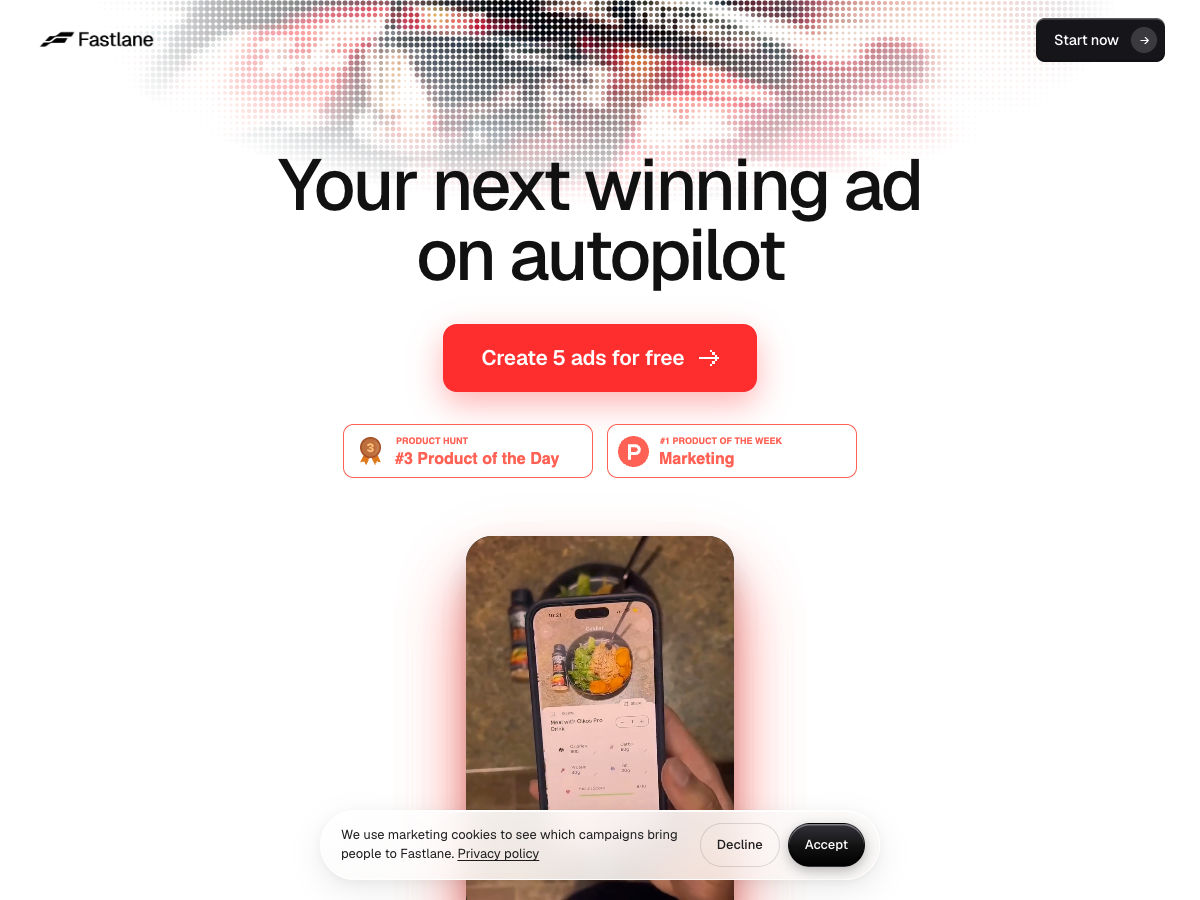
On 2 October, Fastlane founder Gaurav called Relay a “complete rip-off” of his startup. His post included a video walking through his complaint and suggests skipping to 55 seconds for the comparison.
Founder video · X · 02 Oct 2026Watch Gaurav explain the copying allegationOpens the original post and video ↗We could inspect the public post text but could not reliably replay the attached video during review. We therefore do not present its visual comparisons as independently checked evidence.
The advertised workflows do overlap. Both products describe turning business inputs into branded creative, reviewing content and publishing it. That similarity gives the allegation context, but it does not prove that code, assets or proprietary material were copied. Independent reporting reached the same limitation.
What the reaction can and cannot tell us
Gaurav later asked people not to direct hostility at Relay’s team. That matters: comments show that a story has attracted attention, but volume is not proof.
Gaurav · @gauravsbuilding
“Definitely don't want anyone ... hating on whoever is part of the Relay team.”
The founder acknowledged the comments and discouraged hostility toward the team.
Read the original follow-up ↗ Captured 28 Oct 2026 · Ref 02Community Notes challenged parts of the funding and scale story. Those notes are reader contributions, not verdicts. We also found no public Discord messages that we could verify, so none are used here. The allegation remains disputed.
The cost of copycat competition
Competition improves products, and familiar patterns can make software easier to learn. The danger begins when reproducing a competitor’s surface replaces finding a meaningful contribution.
Customers struggle to see a difference. Similar promises push buyers toward the loudest promotion instead of the product that fits their needs.
Original builders carry the discovery cost. Research, failed experiments and early support create knowledge that a fast follower can imitate without paying for the same learning.
Distribution can overpower quality. A larger marketing budget can make a similar product visible before customers can judge reliability, support or depth.
The copy may reproduce the screen, not the system. Accessible interactions, dependable integrations and sound operational judgment are harder to duplicate than a layout.
These are wider risks, not findings that either Relay or Fastlane committed wrongdoing.
What South African brands should do
Reach is useful only when it connects with likely customers. A Johannesburg service business should ask where an audience is, why the message is relevant and what action follows the view before paying for creator distribution.
AI-generated content needs the same discipline. Begin with a clear offer and a specific audience. Test a few messages. Review every output, then measure qualified enquiries or purchases alongside attention.
When a tool generates content from your website, the website becomes its brief. Clear positioning, accurate claims and a consistent voice give both software and people something real to work with.
Build a reason to be chosen
Originality does not require inventing every button or business model. It requires understanding who you serve, what they struggle with and why your approach deserves attention.
The Relay and Fastlane dispute gives us no settled verdict. It does give founders and designers a sharper test: are we creating useful value, or another version of what is already visible?
A recognisable brand starts with a clear point of view. Explore Clekzo Studio to see how we approach design and digital experiences.